
enquiry@ecotowndiagnostics.com
Send Your Mail 24/7 Support
Mon - Sat 6:30AM - 10:00PM
Sunday 6:30AM - 3:00PM
Millions of people suffer from chronic headaches and debilitating migraines that disrupt their daily lives and leave them searching desperately for answers. When head pain persists or intensifies, patients often wonder whether brain testing might reveal the underlying cause. The electroencephalogram, commonly known as an EEG, represents one neurological diagnostic tool that some physicians recommend during headache evaluations. However, understanding precisely what this brain wave recording can and cannot detect proves essential for setting realistic expectations.
For those experiencing persistent head pain and considering neurological assessment, knowing about EEG test in Bangalore options and understanding related cardiovascular evaluations like ECG test price in Bangalore helps patients make informed decisions about their diagnostic journey and prepare adequately for comprehensive medical evaluation.
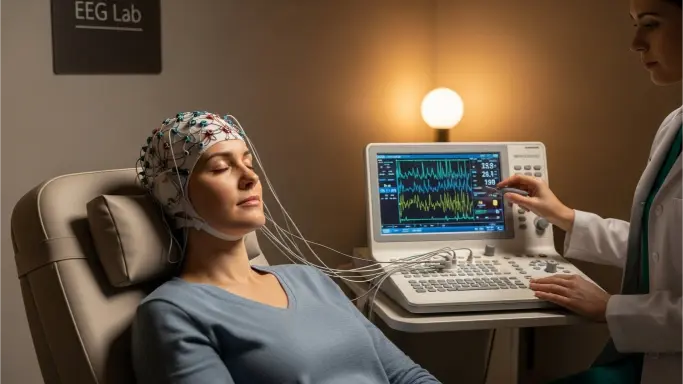
The human brain operates as an incredibly complex electrical organ, with billions of neurons constantly communicating through electrical impulses. These coordinated electrical activities create patterns that can be detected on the scalp surface using sensitive recording equipment. An electroencephalogram captures these brain waves by placing multiple electrodes at standardized positions across the head, amplifying the tiny electrical signals, and displaying them as continuous waveform tracings.
During normal brain function, different regions produce characteristic electrical rhythms at various frequencies. Alpha waves dominate during relaxed wakefulness, beta waves appear during active thinking, delta waves characterize deep sleep, and theta waves emerge during drowsiness. Neurologists trained in EEG interpretation analyze these patterns, looking for abnormalities like excessive slowing, spike discharges, or asymmetries between brain hemispheres that might indicate underlying neurological conditions.
The technology provides real-time information about brain electrical activity but doesn’t visualize brain structures, measure pain directly, or assess blood flow. This fundamental limitation shapes what EEG can reasonably reveal about headache and migraine conditions.
While EEG doesn’t directly diagnose most headache disorders, it serves valuable purposes in specific clinical situations where headaches might signal more serious underlying conditions. Understanding these appropriate applications helps patients know when EEG testing makes clinical sense.
Some neurological conditions that cause seizures also produce severe headaches, and certain seizure types themselves manifest as head pain accompanied by other symptoms. Absence seizures, complex partial seizures, and post-ictal headaches following convulsive episodes can all confuse clinical pictures. EEG recordings reveal the characteristic spike-wave discharges and epileptiform patterns that confirm seizure disorders, helping differentiate epilepsy from primary headache conditions.
When headaches occur alongside cognitive changes, confusion, altered consciousness, or personality shifts, physicians suspect diffuse brain dysfunction called encephalopathy. Infections like encephalitis, metabolic disturbances, toxic exposures, and inflammatory conditions all produce characteristic EEG abnormalities. The test shows diffuse slowing, triphasic waves, or other patterns indicating impaired brain function requiring urgent treatment.
Sleep disturbances contribute significantly to chronic headache patterns, with conditions like sleep apnea causing morning headaches and poor sleep quality exacerbating migraine frequency. Extended EEG recordings during sleep studies reveal sleep architecture abnormalities, respiratory-related arousals, and other disruptions that explain headache patterns and guide treatment approaches.
Understanding what EEG testing cannot detect proves equally important as knowing its capabilities. Many patients pursue brain wave recording expecting definitive answers about their head pain, only to feel frustrated when normal results provide no explanation for ongoing suffering.
Migraine diagnosis relies entirely on clinical criteria—symptom patterns, headache characteristics, associated features like nausea and light sensitivity, and family history. No laboratory test or brain recording can confirm or exclude migraine. Even sophisticated research studies using advanced EEG analysis during active migraine attacks show only subtle, non-diagnostic changes useless for clinical decision-making in individual patients.
The electrical abnormalities associated with migraine pathophysiology occur in deep brain structures, brainstem nuclei, and cortical networks that scalp electrodes cannot reliably detect. While academic interest in migraine electrophysiology continues, clinical EEG provides no practical diagnostic information for typical migraine patients.
Brain tumors, aneurysms, arteriovenous malformations, hemorrhages, and masses that sometimes cause headaches require imaging studies for detection. MRI and CT scans visualize anatomical structures, but EEG records only electrical activity without providing any structural information. A completely normal brain wave recording doesn’t exclude serious structural causes of headaches that could be immediately visible on imaging.
Headache pain involves complex mechanisms in the trigeminovascular system, pain-processing centers in the brainstem and thalamus, and cortical networks that perceive and interpret discomfort. These pain pathways don’t generate the large-scale synchronized electrical activity that scalp electrodes detect. Normal EEG findings tell us nothing about whether pain mechanisms function abnormally.
Patients seeking thorough headache evaluation often require multiple complementary diagnostic approaches beyond brain wave recording. Metropolitan medical centers offer various neurological and cardiovascular testing options that together provide comprehensive assessment.
Modern diagnostic facilities providing EEG test in Bangalore typically offer standard and extended brain wave recording, sleep studies incorporating EEG monitoring, and specialized protocols like sleep-deprived recordings that increase seizure detection sensitivity. These centers employ trained neurophysiology technicians and board-certified neurologists experienced in EEG interpretation.
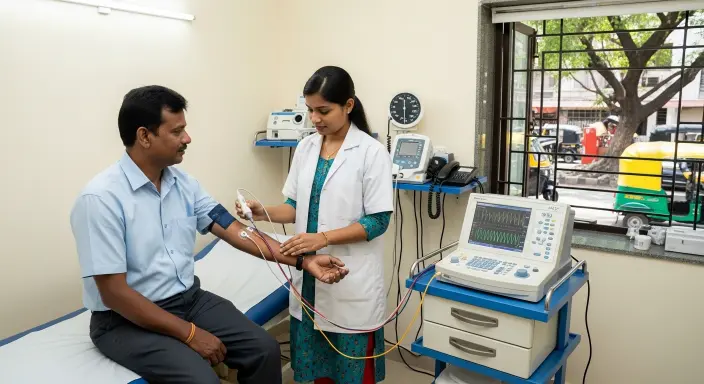
Headache evaluation sometimes requires cardiac assessment as well, particularly when patients experience associated symptoms like palpitations, chest discomfort, or dizziness. Understanding ECG test price in Bangalore helps patients budget for comprehensive evaluation when both neurological and cardiovascular testing seems warranted. Some symptoms overlap between neurological and cardiac conditions, making multisystem evaluation appropriate in complex cases.
Beyond standard office-based EEG recording, several specialized techniques capture brain electrical activity under different conditions or for extended periods, potentially revealing abnormalities that brief routine studies miss.
When symptoms occur unpredictably or infrequently, portable ambulatory systems record brain waves for 24 to 72 hours while patients continue normal activities at home. These devices increase the likelihood of capturing electrical activity during actual headache episodes, though as noted, migraines typically produce no distinctive EEG changes even when recorded during attacks.
Sophisticated monitoring facilities offer video-EEG combining continuous electrical recording with simultaneous video documentation. This approach proves invaluable when distinguishing between seizures and other episodic conditions like complicated migraine with prolonged aura. Neurologists correlate observed clinical behaviors with brain electrical patterns, definitively confirming or excluding epilepsy.
Certain epileptic abnormalities emerge more readily following sleep deprivation. For specific clinical scenarios, neurologists request that patients remain awake overnight before their scheduled recording, substantially increasing the test’s sensitivity for detecting seizure-related electrical patterns.
Given EEG’s limitations in directly diagnosing headache disorders, specific clinical red flags warrant brain wave recording as part of comprehensive evaluation. Physicians consider EEG testing appropriate in several scenarios.
Headaches accompanied by loss of consciousness, staring spells, confusion beyond typical migraine aura, involuntary movements, or periods of amnesia raise concern for underlying seizure disorders. When patients describe brief unresponsiveness, automatisms like lip smacking or hand fumbling, or sensory distortions coinciding with head pain, EEG helps clarify whether epilepsy requires treatment.
Patients with stable headache patterns over years who suddenly experience dramatic changes in headache frequency, severity, character, or associated symptoms require thorough evaluation. While brain imaging typically takes priority for excluding new structural lesions, facilities offering EEG test in Bangalore can identify acquired seizure disorders or encephalopathic processes that emerged alongside changing headache characteristics.
Children with chronic headaches often receive more extensive evaluation than adults presenting with similar symptoms, partly because pediatric patients struggle to articulate symptoms precisely. Pediatric neurologists may include EEG in diagnostic workups, particularly when developmental delays, learning difficulties, or behavioral concerns coexist with headaches, or when family history includes epilepsy.
Patients evaluating diagnostic options often wonder how EEG compares with other available tests for headache assessment. Each modality provides different information, and neurologists select appropriate studies based on clinical presentation and suspected conditions.
Magnetic resonance imaging visualizes brain anatomy with exceptional detail, revealing tumors, vascular malformations, white matter disease, and subtle structural abnormalities invisible to EEG. Computed tomography offers rapid imaging useful for emergency evaluation of thunderclap headaches, identifying bleeding, large masses, or acute strokes within minutes.
Blood testing assesses inflammatory markers, infection indicators, metabolic abnormalities, and hormonal imbalances that might cause secondary headaches. Lumbar puncture evaluates cerebrospinal fluid when meningitis, encephalitis, subarachnoid hemorrhage, or increased intracranial pressure requires exclusion. These complementary studies address different diagnostic questions, and thorough headache evaluation often requires multiple tests.
Cardiovascular assessment sometimes becomes relevant when headache patients report associated symptoms suggesting cardiac issues. Understanding both neurological testing through EEG test in Bangalore facilities and cardiac evaluation including ECG test price in Bangalore helps patients plan comprehensive assessments addressing multiple potential causes of their symptoms.
Knowing what to expect during brain wave recording helps patients prepare mentally and practically for their evaluation. Standard EEG testing involves straightforward, non-invasive procedures typically requiring 45 minutes to an hour.
Before recording begins, technicians measure the head and mark specific electrode positions following standardized placement systems. Small disc-shaped sensors are applied using conductive paste or gel, which washes out easily with normal shampooing afterward. Patients recline comfortably in quiet rooms while machines record brain electrical activity. Technicians may request specific actions like eye opening and closing, hyperventilation, or viewing flashing lights to provoke abnormalities.
The procedure causes no discomfort beyond mild awkwardness during electrode application. Results require several days for neurologist interpretation, as thorough analysis of entire recordings demands considerable time and expertise.
Pursuing appropriate diagnostic testing requires balanced understanding of what various studies can reveal. Many headache conditions, including common migraine and tension-type headache, require no testing whatsoever when clinical features clearly establish the diagnosis. Experienced headache specialists diagnose these conditions through careful history taking and neurological examination alone.
Patients deserve transparent discussions with their physicians about testing rationale, expected yield, and how results will influence treatment decisions. Defensive medicine sometimes drives unnecessary testing that consumes resources and occasionally produces false positive findings triggering additional unnecessary procedures. Understanding EEG capabilities helps patients engage meaningfully in shared decision-making about their care.
Facilities offering EEG test in Bangalore services typically provide consultations explaining testing indications, procedures, and interpretation. Similarly, centers where patients inquire about ECG test price in Bangalore for cardiovascular evaluation usually offer preliminary discussions helping patients understand whether particular tests suit their specific clinical situations.
No diagnostic test, regardless of sophistication, replaces experienced clinical judgment in headache medicine. Neurologists and headache specialists integrate information from detailed patient histories, thorough examinations, and judiciously selected tests to formulate accurate diagnoses and effective treatment plans.
Headache medicine has advanced remarkably in recent years, with new preventive medications, targeted therapies, and innovative treatments offering hope to patients who previously suffered without relief. Specialized headache centers combine expertise in complex diagnosis with comprehensive treatment approaches, often succeeding where previous interventions failed.
While current clinical EEG offers limited utility for most headache diagnoses, ongoing research explores whether advanced analytical techniques might eventually provide useful information. Quantitative EEG processing, machine learning algorithms applied to brain wave patterns, and sophisticated source localization represent active investigation areas.
Similarly, functional neuroimaging including fMRI, PET scanning, and advanced MRI sequences reveal brain changes associated with migraine and other headache conditions. Though primarily used in research rather than routine practice currently, these technologies gradually advance understanding of headache mechanisms and may eventually contribute to clinical diagnosis.
Patients experiencing severe or chronic headaches deserve thorough evaluation by qualified specialists. This assessment begins with detailed medical history and neurological examination, followed by selective testing when clinical features suggest specific underlying conditions. Understanding available diagnostic services, including EEG test in Bangalore for neurological assessment and ECG test price in Bangalore for cardiovascular evaluation, empowers patients to participate actively in their healthcare planning.
Coordinating care through facilities offering multiple diagnostic services often streamlines the evaluation process. Rather than visiting separate locations for different tests, comprehensive centers provide integrated assessment with centralized result interpretation and coordinated follow-up planning. This approach improves diagnostic efficiency while potentially reducing overall healthcare expenditure through coordinated testing protocols.
Electroencephalography serves crucial roles in diagnosing seizure disorders, encephalopathies, and certain other neurological conditions affecting brain electrical activity. However, patients seeking answers about chronic headaches and migraines must understand that EEG rarely provides the diagnostic clarity they hope for regarding their head pain. Brain wave recording cannot diagnose migraine, doesn’t detect most structural abnormalities causing headaches, and typically shows normal results even during active headache episodes.
Appropriate EEG utilization focuses on specific scenarios where seizures or encephalopathy require exclusion based on clinical features suggesting these conditions. For most headache patients, thorough evaluation by experienced neurologists provides more diagnostic value than any test. Quality facilities offering EEG test in Bangalore combine advanced technology with clinical expertise, guiding patients toward accurate diagnoses.
Similarly, understanding ECG test price in Bangalore options helps patients budget for comprehensive evaluation when cardiovascular assessment complements neurological testing. By understanding what EEG can and cannot reveal, patients approach their diagnostic journey with realistic expectations, focusing energy on evaluations truly likely to explain their specific headache conditions and guide effective treatment strategies.