Introduction: Why Heart Health Screening Starts with an ECG
Heart disease remains the leading cause of death in India. According to the Indian Council of Medical Research (ICMR), cardiovascular diseases account for nearly 28% of all deaths in the country, with urban populations facing disproportionately higher risk due to sedentary lifestyles, stress, and dietary habits.
An Electrocardiogram (ECG or EKG) is the simplest, fastest, and most affordable first-line test for evaluating heart health. If you’ve never had one before and you’re searching for a reliable ECG test Bangalore facility, this guide will walk you through everything — from understanding what the test measures to knowing when you need one and what to expect during the procedure.
Whether your doctor has recommended it or you’re proactively investing in preventive health, getting an ECG test Bangalore residents trust is an important step toward protecting your heart.
What Exactly Is an ECG?
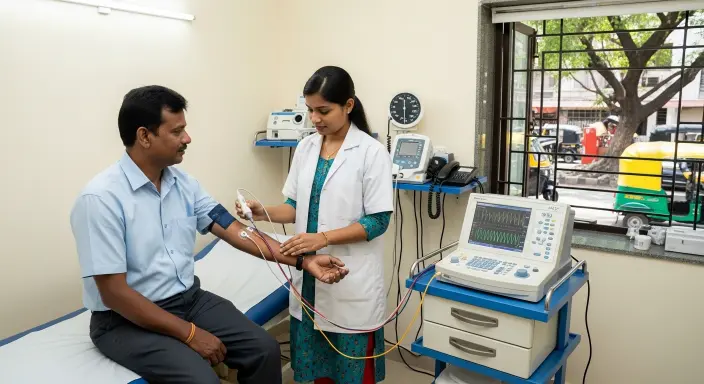
An electrocardiogram records the electrical activity of your heart through small electrode patches placed on your skin. Every heartbeat is triggered by an electrical impulse originating in the heart’s natural pacemaker (the sinoatrial node). The ECG captures these impulses as a series of waves displayed on paper or a digital screen.
The test measures:
- Heart rate — whether your heart beats too fast, too slow, or irregularly
- Heart rhythm — detecting arrhythmias like atrial fibrillation
- Electrical conduction — identifying blockages in the heart’s electrical pathways
- Signs of heart damage — evidence of previous or ongoing heart attacks
- Structural abnormalities — enlarged heart chambers or thickened walls
According to the American Heart Association (AHA), an ECG remains one of the most reliable non-invasive tools for initial cardiac evaluation, often guiding decisions about whether further testing like echocardiography or stress testing is needed.
Who Should Get an ECG Test? Recognising the Warning Signs
Many first-time patients wonder whether they truly need an ECG. The short answer: if you have any cardiac symptoms or significant risk factors, the answer is yes.
Symptoms That Warrant an ECG:
- Chest pain or tightness — the most common reason for emergency ECG testing
- Shortness of breath during routine activities
- Heart palpitations — feeling like your heart is racing, fluttering, or skipping beats
- Dizziness, lightheadedness, or fainting spells
- Unexplained fatigue that doesn’t improve with rest
- Swelling in the legs or ankles suggesting fluid retention
Risk Factors That Call for Routine ECG Screening:
Even without symptoms, doctors recommend baseline ECGs for individuals with:
- Family history of heart disease or sudden cardiac death
- High blood pressure (hypertension affects over 30% of Indian adults, per WHO data)
- Diabetes — which doubles cardiovascular risk
- High cholesterol levels
- Smoking or tobacco use
- Obesity or sedentary lifestyle
- Age over 40 — particularly for men, though women’s risk rises post-menopause
A landmark study published in the European Heart Journal (2021) found that routine ECG screening detected previously undiagnosed atrial fibrillation in approximately 1.4% of adults over 65, a condition that increases stroke risk fivefold if left untreated.
For residents seeking an ECG test Bangalore doctors recommend, early screening can genuinely be lifesaving.
Types of ECG Tests Available
Not all ECGs are the same. Depending on your symptoms and clinical needs, your cardiologist may recommend one of several variations.
1. Resting ECG (Standard 12-Lead ECG)
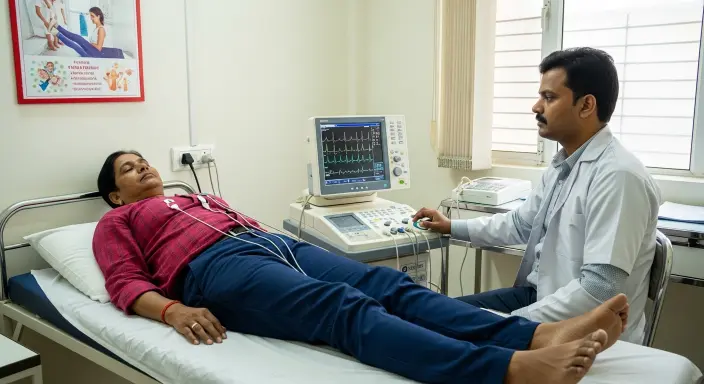
This is the most common type. You lie still while 10 electrodes are placed on your chest, arms, and legs. The test takes under 10 minutes and produces 12 different views of your heart’s electrical activity.
Best for: Initial screening, chest pain evaluation, pre-surgical assessment.
2. Holter Monitor (24–48 Hour ECG)
A portable device records your heart’s activity continuously over one to two days while you go about normal activities.
Best for: Detecting intermittent arrhythmias that a standard ECG might miss.
3. Event Monitor (Extended Monitoring)
Similar to a Holter monitor but worn for up to 30 days. You press a button to record when you feel symptoms.
Best for: Infrequent palpitations or episodes of dizziness.
4. Stress ECG (Treadmill Test / TMT)
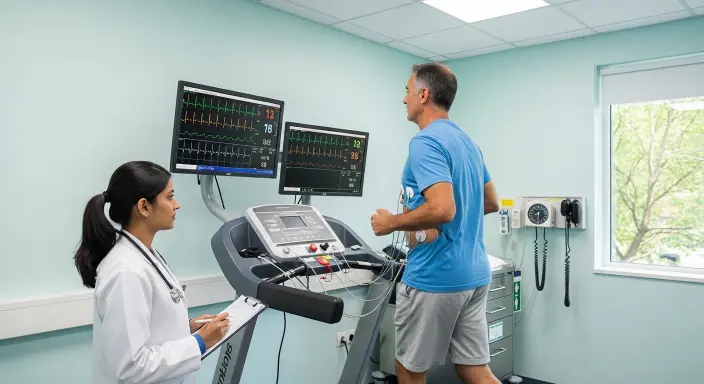
An ECG is recorded while you walk or run on a treadmill, gradually increasing speed and incline. This tests how your heart performs under physical exertion.
Best for: Detecting exercise-induced arrhythmias, evaluating coronary artery disease, assessing exercise tolerance.
When exploring options for an ECG test Bangalore centres provide, most accredited facilities offer all four types with cardiologist-reviewed reporting.
What to Expect During Your First ECG: A Step-by-Step Walkthrough
First-time patients often feel anxious about medical tests. An ECG, however, is one of the most painless and non-invasive procedures in medicine.
Before the Test:
- No special fasting required for a resting ECG
- Avoid applying lotions or oils to your chest — they can interfere with electrode adhesion
- Wear loose, comfortable clothing for easy access to your chest area
- Inform the technician about any medications you take, as certain drugs affect heart rhythm
- Avoid heavy exercise or caffeine 30 minutes before the test
During the Test:
- You’ll lie on an examination table
- The technician places 10 small adhesive electrodes on specific locations across your chest, wrists, and ankles
- You’ll be asked to stay still and breathe normally
- The machine records your heart’s electrical signals for approximately 5–10 seconds per lead
- The entire process takes less than 10 minutes
After the Test:
- Electrodes are removed (you may feel a slight tug)
- There is zero downtime — you can immediately resume normal activities
- Results are typically available within 15–30 minutes
- A cardiologist interprets the waveforms and provides a detailed report
Getting your first ECG test Bangalore has to offer is genuinely straightforward and stress-free.
Understanding Your ECG Results
Your ECG report will contain several key terms. Here’s a quick primer so you can understand the basics before your follow-up appointment:
| ECG Finding |
What It Means |
| Normal Sinus Rhythm |
Your heart is beating normally — rate and rhythm are healthy |
| Sinus Tachycardia |
Heart rate above 100 bpm — may indicate stress, fever, or anxiety |
| Sinus Bradycardia |
Heart rate below 60 bpm — common in athletes, but may need evaluation |
| Atrial Fibrillation (AFib) |
Irregular, often rapid heartbeat — increases stroke risk |
| ST-Segment Changes |
May indicate reduced blood flow to the heart (ischemia) or a heart attack |
| Left Ventricular Hypertrophy |
Thickened heart wall — often associated with chronic hypertension |
| Bundle Branch Block |
Delay in electrical conduction — may or may not require treatment |
Important: Never self-interpret ECG results. Always discuss findings with a qualified cardiologist who can correlate the ECG data with your symptoms, medical history, and other test results.
ECG Test Accessibility in Bangalore
When booking an ECG test Bangalore patients can trust, consider these factors:
- Accreditation — choose NABL or NABH-accredited centres
- Cardiologist reporting — ensure a qualified cardiologist reviews your results, not just a technician
- Equipment quality — modern digital ECG machines provide clearer, more accurate readings
- Turnaround time — most reputable centres deliver reports within an hour
Many centres across Koramangala, Indiranagar, Whitefield, Jayanagar, and Electronic City offer walk-in ECG testing without prior appointments, making the ECG test Bangalore facilities provide remarkably convenient.
When Should You Get Follow-Up ECGs?
A single ECG provides a snapshot of your heart at one moment in time. For comprehensive cardiac monitoring, the AHA recommends:
- Baseline ECG at age 40 for individuals with risk factors
- Annual ECGs for patients with diagnosed heart conditions, diabetes, or hypertension
- Pre-operative ECGs before any major surgery
- Repeat ECGs whenever new symptoms develop, even if a previous test was normal
Your cardiologist may also recommend complementary tests such as 2D echocardiography, cardiac CT angiography, or blood tests (troponin, BNP) based on ECG findings.
Conclusion
Heart disease doesn’t always announce itself with dramatic symptoms. Often, it progresses silently for years before causing a crisis. An ECG is the most accessible, affordable, and effective way to catch cardiac problems early — before they become emergencies.
If you’re over 40, have risk factors, or experience even occasional symptoms like chest discomfort or palpitations, scheduling an ECG test Bangalore cardiologists recommend is one of the smartest health decisions you can make. It takes less than 10 minutes, costs less than a dinner out, and could potentially save your life.
Don’t wait for symptoms to escalate. Prioritise your heart health today — book your ECG test Bangalore has readily available, and take the first confident step toward a healthier future.