
Chest pain strikes without warning, transforming ordinary moments into terrifying experiences filled with uncertainty and fear. Is this discomfort merely indigestion from a spicy meal, a pulled muscle from yesterday’s workout, or something far more sinister happening inside your heart? Every year, millions of people worldwide experience chest pain that sends them rushing to medical facilities, desperate for answers about what’s causing their symptoms.
The electrocardiogram, universally known as ECG or EKG, stands as the most immediate and essential diagnostic tool physicians employ when evaluating cardiac-related chest discomfort. For individuals experiencing worrying symptoms and seeking prompt cardiac assessment, accessing a reliable ECG test in Bangalore provides crucial insights into heart health, potentially revealing life-threatening conditions that demand immediate intervention while ruling out cardiac causes when pain originates from non-cardiac sources.
The Heart’s Electrical System: Understanding Cardiac Impulses
Your heart functions as a remarkable biological pump that beats approximately 100,000 times daily, circulating blood throughout your entire body without conscious thought or effort. This tireless organ operates through a sophisticated electrical system that coordinates every heartbeat with precise timing. The sinoatrial node, often called your heart’s natural pacemaker, generates electrical impulses that spread through specialized conducting pathways, triggering coordinated contractions that efficiently pump blood through four chambers.
When this electrical system functions normally, signals travel through predictable pathways at consistent speeds, creating regular rhythms and patterns. However, when heart muscle becomes damaged, blood flow becomes restricted, or electrical pathways malfunction, characteristic changes appear in the electrical patterns that an ECG test in Bangalore can detect and record.
An electrocardiogram captures this electrical activity by placing sensors on your skin that detect tiny voltage changes generated by your heartbeat. These signals are amplified thousands of times and displayed as waveforms on paper or digital screens, revealing intricate details about your heart’s electrical behavior that cardiologists can interpret to diagnose numerous cardiac conditions.
What ECG Tracings Reveal During Chest Pain Episodes
When chest pain strikes, the ECG tracing provides immediate, critical information that guides emergency treatment decisions. Different patterns visible on the ECG recording indicate specific cardiac conditions, each requiring different management approaches and urgency levels.
ST-Segment Elevation: The Emergency Signal
Among all possible ECG findings, ST-segment elevation represents the most urgent pattern, typically indicating an acute myocardial infarction—a heart attack in progress. The ST segment appears as the flat line between the QRS complex and T wave on the tracing, and when it rises significantly above the baseline, it signals that a coronary artery has become completely blocked, cutting off blood supply to heart muscle.
This finding triggers immediate activation of emergency protocols designed to restore blood flow as quickly as possible. Every minute matters when the heart muscle is dying from oxygen deprivation, and rapid identification through ECG enables life-saving interventions like emergency angioplasty or thrombolytic medications that dissolve blood clots.
ST-Segment Depression and T-Wave Abnormalities
Not all dangerous cardiac conditions produce ST elevation. ST-segment depression, where the ST segment drops below the baseline, or T-wave inversions often indicate myocardial ischemia—reduced blood flow to heart muscle that hasn’t yet caused permanent damage. These patterns frequently occur during angina attacks, the chest pain resulting from temporary coronary artery narrowing.
While less immediately life-threatening than ST elevation, these findings still demand urgent evaluation and treatment to prevent progression to complete heart attacks. They indicate that coronary arteries have significant blockages limiting blood flow, particularly during physical exertion or emotional stress when the heart’s oxygen demands increase.
Arrhythmia Detection
Sometimes chest pain accompanies irregular heart rhythms rather than blocked arteries. Atrial fibrillation, ventricular tachycardia, supraventricular tachycardia, and numerous other rhythm disturbances can cause chest discomfort, palpitations, lightheadedness, or shortness of breath. The ECG immediately identifies these arrhythmias, displaying characteristic patterns that distinguish between different rhythm abnormalities and guide specific treatments.
Time-Critical Nature of ECG in Emergency Settings
Medical guidelines emphasize obtaining an ECG within ten minutes of a patient arriving at healthcare facilities with chest pain symptoms. This strict timeframe reflects the reality that every minute of delay potentially means more heart muscle damage when coronary arteries are blocked. Emergency departments prioritize chest pain patients specifically because ECG findings determine whether immediate life-saving interventions are necessary.
Healthcare systems have developed sophisticated protocols ensuring rapid ECG acquisition and interpretation. Many ambulance services now perform ECGs in the field, transmitting results to hospitals before patients even arrive, enabling emergency teams to prepare catheterization labs and assemble cardiac intervention teams. This pre-hospital ECG capability dramatically reduces time from symptom onset to treatment, saving lives and preserving heart function.
Comprehensive Cardiac Assessment Through ECG Test in Bangalore Facilities
Modern diagnostic centers offering advanced cardiac evaluation provide immediate access to ECG technology operated by trained technicians and interpreted by experienced cardiologists. These facilities maintain equipment capable of producing high-quality twelve-lead ECGs that capture electrical activity from multiple angles, providing comprehensive views of cardiac function.
The standard twelve-lead ECG uses ten electrodes strategically placed on the chest, arms, and legs, generating twelve different electrical perspectives of heart activity. This multi-angle approach reveals abnormalities that single-lead recordings might miss, particularly helping cardiologists determine which coronary arteries are blocked during heart attacks by identifying which regions of heart muscle show electrical abnormalities.
Quality facilities providing ECG test in Bangalore ensure that cardiologists or emergency physicians trained in ECG interpretation review tracings promptly. While computer algorithms built into modern ECG machines provide preliminary interpretations, experienced human review remains essential for catching subtle abnormalities and avoiding false-positive readings that could lead to unnecessary interventions.
The ECG Procedure: Simple, Fast, and Completely Painless
Despite its sophisticated diagnostic capabilities and potentially life-saving implications, the ECG procedure itself involves remarkably simple steps that take mere minutes from start to finish. Understanding what to expect helps reduce anxiety during what is often an already stressful medical evaluation.
Upon arriving at the testing facility, you’ll be asked to remove clothing from your upper body and lie comfortably on an examination table. A technician will clean small areas of skin where electrodes will be placed, sometimes shaving small patches of chest hair if necessary to ensure good electrode contact. Ten adhesive electrodes are then positioned at specific anatomical landmarks on your chest, arms, and legs.
These electrodes connect via wires to the ECG machine, which records your heart’s electrical activity for approximately ten seconds. During this brief recording period, you’ll be asked to lie still, breathe normally, and remain quiet, as movement or muscle tension can create electrical interference that obscures the cardiac signals. Once recording completes, electrodes are removed, leaving no marks or discomfort, and you can immediately resume normal activities.
Beyond Emergency Situations: Routine ECG Screening Value
While ECGs prove absolutely essential during acute chest pain evaluation, they also serve important preventive roles in routine cardiovascular screening. Many physicians recommend baseline ECGs for patients with cardiac risk factors even when no symptoms are present, establishing reference tracings for future comparison.
Athletes participating in competitive sports often undergo screening ECGs to identify hidden cardiac conditions that might predispose to sudden cardiac death during intense physical exertion. Conditions like hypertrophic cardiomyopathy, long QT syndrome, and Wolff-Parkinson-White syndrome can all be detected on resting ECGs before they cause catastrophic events.
Pre-operative evaluations frequently include ECGs, particularly for older patients or those undergoing major surgical procedures. These baseline tracings help anesthesiologists and surgeons assess cardiac risk and detect abnormalities that might complicate anesthesia or require special perioperative management.
Advanced ECG Testing Methods Available Through ECG Test in Bangalore Centers
Standard resting ECGs capture only a brief snapshot of cardiac electrical activity, but some conditions only manifest during physical exertion or occur intermittently throughout the day. Specialized ECG testing methods address these limitations, providing more comprehensive cardiac evaluation.
Exercise Stress Testing
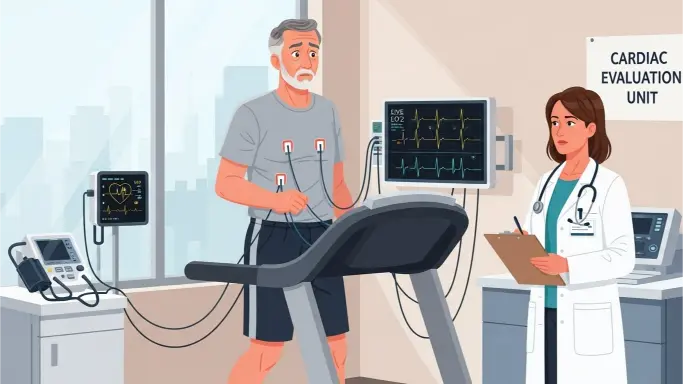
Exercise stress tests, commonly performed on treadmills or stationary bicycles, record continuous ECG monitoring while patients exercise at progressively increasing intensities. This approach reveals coronary artery disease that may produce normal resting ECGs but causes ischemic changes when cardiac oxygen demands increase during exertion.
Stress testing proves particularly valuable for evaluating chest pain that occurs primarily during physical activity. The test continues until patients reach target heart rates, develop symptoms, or show ECG changes indicating myocardial ischemia, providing diagnostic information that guides treatment decisions about medications, lifestyle modifications, or need for coronary angiography.
Ambulatory Holter Monitoring
Some patients experience chest pain or palpitations that occur unpredictably throughout their daily routines, never conveniently happening during brief office visits. Holter monitors solve this problem by providing continuous ECG recording for 24 to 48 hours while patients go about normal activities.
These small, portable devices worn on belts or shoulder straps record every heartbeat during the monitoring period. Patients keep symptom diaries, noting exactly when chest pain or other symptoms occur, allowing cardiologists to correlate symptoms with ECG findings and determine whether pain episodes coincide with ischemic changes or arrhythmias.
Event Recorders for Infrequent Symptoms
When symptoms occur less frequently than daily Holter monitoring can practically capture, event recorders provide alternative solutions. These devices are worn for weeks or months, and patients activate them when symptoms occur, recording ECG tracings during specific symptomatic episodes. Modern smartphone-based event recorders make this type of monitoring increasingly convenient and accessible.
Interpreting Complex ECG Patterns Requires Specialized Expertise
ECG interpretation appears deceptively simple to casual observers—just wavy lines on graph paper. However, accurate analysis requires extensive training and experience to recognize the myriad normal variants and pathological patterns that can appear on tracings. A single twelve-lead ECG contains dozens of measurements and features that experienced interpreters systematically evaluate.
Cardiologists assess heart rate, rhythm regularity, P wave morphology, PR interval duration, QRS complex width and configuration, ST segment position, T wave appearance, QT interval length, and numerous other features. They consider how findings relate to each other, patient age, clinical symptoms, medications, and other contextual factors. Subtle changes that untrained observers might overlook can indicate serious cardiac conditions requiring immediate treatment.
Modern ECG machines incorporate sophisticated computer algorithms that provide automated interpretations, flagging potential abnormalities for physician review. While these algorithms have improved dramatically, they still produce false positives and occasionally miss subtle findings that experienced human interpreters recognize. This is why facilities offering ECG test in Bangalore ensure that qualified cardiologists or emergency physicians review all tracings, particularly those obtained for chest pain evaluation.
When ECG Results Appear Normal Despite Chest Pain
A normal ECG doesn’t automatically exclude serious cardiac disease. Several important scenarios explain why chest pain might occur even with normal ECG findings, underscoring why ECG results must be interpreted within the broader clinical context.
Early Ischemia Before ECG Changes Develop
In the earliest stages of heart attacks or during mild angina episodes, ECG abnormalities might not yet be apparent. This is why emergency protocols emphasize obtaining serial ECGs—repeat tracings every 15 to 30 minutes—for patients with ongoing chest pain. Changes often evolve over hours, with initially normal tracings developing diagnostic abnormalities as ischemia progresses.
Non-Cardiac Chest Pain Sources
Numerous conditions unrelated to the heart produce chest pain symptoms. Gastroesophageal reflux disease causes burning chest discomfort that patients often mistake for heart problems. Costochondritis, inflammation of cartilage connecting ribs to the breastbone, creates sharp chest pain that worsens with movement or breathing. Pulmonary conditions like pneumonia, pleurisy, or pulmonary embolism can all cause chest pain with normal ECGs.
Musculoskeletal pain from strained chest wall muscles, pinched nerves, or rib injuries frequently prompts cardiac evaluation, as does anxiety-related chest tightness. While these conditions don’t affect cardiac electrical activity and therefore produce normal ECGs, ruling out cardiac causes provides important reassurance and guides appropriate treatment for the actual underlying condition.
Unstable Angina Without Persistent Changes
Some patients with significant coronary artery disease experience recurring chest pain that comes and goes without causing permanent heart damage or producing persistent ECG abnormalities. This condition, called unstable angina, represents a dangerous middle ground between stable chronic angina and full-blown heart attacks. While ECGs obtained during pain-free periods might appear normal, tracings captured during active symptoms often show transient ischemic changes.
Complementary Cardiac Tests Beyond ECG
When ECG findings seem inconclusive or when chest pain characteristics suggest cardiac origin despite normal tracings, physicians employ additional diagnostic tests to evaluate heart health comprehensively. These complementary studies provide different information that, combined with ECG data, enables accurate diagnosis.
Blood tests measuring cardiac troponin levels detect heart muscle damage with extraordinary sensitivity. Troponin elevations indicate myocardial injury even when ECG changes remain subtle or absent, making these biomarkers essential for diagnosing heart attacks that might be missed by ECG alone.
Echocardiography uses ultrasound to visualize heart structure and function, identifying wall motion abnormalities that suggest reduced blood flow to specific cardiac regions. Stress echocardiography combines ultrasound imaging with exercise or pharmacological stress, revealing ischemia that might not produce classic ECG changes.
Coronary angiography remains the gold standard for directly visualizing coronary arteries, identifying blockages and determining their severity. This invasive test typically follows abnormal non-invasive testing, guiding decisions about medical management versus interventional procedures like angioplasty or coronary bypass surgery.
Cardiac CT and MRI scans provide detailed anatomical information about heart structure, coronary arteries, and myocardial tissue characteristics. These advanced imaging modalities complement ECG findings when comprehensive cardiac evaluation is needed.
Risk Factors That Increase ECG Screening Importance
Certain individuals face elevated risks of developing cardiac conditions that cause chest pain, making regular ECG screening particularly valuable. Age represents a significant risk factor, with cardiovascular disease prevalence increasing dramatically after age 55 for men and 65 for women, though risk factors can accelerate cardiac aging considerably.
Diabetes substantially increases cardiac risk, with diabetic patients experiencing heart attacks at younger ages and sometimes with atypical symptoms. Hypertension strains the heart over decades, causing left ventricular hypertrophy visible on ECGs and increasing susceptibility to coronary disease and arrhythmias.
Tobacco smoking damages blood vessels and promotes atherosclerosis, while elevated cholesterol contributes to coronary artery plaque buildup. Family history of premature cardiac disease suggests genetic predisposition warranting closer monitoring. Obesity, sedentary lifestyle, and chronic stress all contribute to cardiovascular risk as well.
People with multiple risk factors benefit significantly from baseline ECGs and periodic follow-up testing, enabling early detection of developing cardiac abnormalities when interventions prove most effective. Access to convenient diagnostic facilities offering ECG test in Bangalore removes barriers to obtaining this preventive screening.
Taking Action: When to Seek Immediate ECG Evaluation
Certain chest pain characteristics demand immediate medical attention and ECG evaluation. Crushing or squeezing chest pressure, particularly when accompanied by shortness of breath, sweating, nausea, or pain radiating to arms, jaw, or back, requires emergency services activation. Don’t attempt driving yourself to medical facilities; call for ambulance transport instead.
New chest pain occurring with minimal exertion or at rest warrants urgent evaluation, as does chest discomfort that awakens you from sleep. Chest pain accompanied by syncope, severe dizziness, or irregular heartbeats suggests potentially dangerous arrhythmias requiring immediate assessment. Even when symptoms seem mild or resolve spontaneously, seeking evaluation remains prudent, especially for individuals with cardiac risk factors. What feels like indigestion might represent a heart attack, and early intervention dramatically improves outcomes.
Metropolitan areas with developed healthcare infrastructure provide ready access to emergency and routine cardiac diagnostic services. Patients experiencing chest pain symptoms benefit from knowing that quality ECG test in Bangalore facilities stand prepared to provide rapid evaluation and appropriate emergency interventions when necessary.
Conclusion
The electrocardiogram represents one of medicine’s most valuable diagnostic innovations, providing immediate, non-invasive assessment of cardiac electrical activity that reveals critical information about heart health. When chest pain strikes, ECG testing can identify life-threatening conditions like acute myocardial infarction and dangerous arrhythmias within minutes, enabling interventions that save lives and preserve cardiac function. Beyond emergency applications, ECGs serve essential roles in preventive screening, risk stratification, and ongoing cardiac monitoring.
Understanding what ECG tracings reveal empowers patients to seek appropriate care when chest pain occurs and to engage meaningfully with their physicians about cardiovascular health. The test’s simplicity, speed, and complete safety make it an ideal first-line diagnostic tool that every chest pain patient should receive promptly. For individuals experiencing cardiac symptoms or pursuing proactive heart health screening, facilities providing ECG test in Bangalore offer immediate access to this essential technology, supported by experienced medical professionals who interpret results accurately and guide appropriate treatment. Whether responding to acute emergencies or conducting routine cardiovascular assessment, the electrocardiogram remains an indispensable window into cardiac function, revealing electrical patterns that tell the story of your heart’s health with remarkable clarity and diagnostic precision.