Introduction: Why Choosing the Right CT Scan Matters
A Computed Tomography (CT) scan is one of the most powerful diagnostic tools in modern medicine. It uses X-ray technology combined with computer processing to create detailed cross-sectional images of the body. But here’s the challenge — many patients walk into diagnostic centres without understanding which CT scan they actually need.
Whether you’re dealing with persistent headaches, unexplained abdominal pain, or a spinal injury, the type of CT scan your doctor recommends depends entirely on the symptoms, the suspected condition, and the body region involved. For anyone searching for a reliable CT scan in Bangalore, understanding these distinctions can save you time, money, and unnecessary radiation exposure.
This comprehensive guide breaks down the four most common types of CT scans — brain, chest, abdomen, and spine — so you can make informed decisions about your healthcare.
How Does a CT Scan Work?
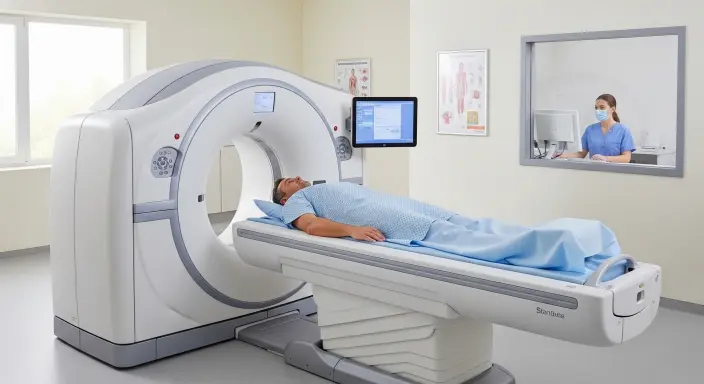
Before diving into specific scan types, it helps to understand the technology. A CT scanner rotates an X-ray tube around the patient’s body, capturing hundreds of images from different angles. A computer then reconstructs these into detailed 2D and 3D images.
According to the Radiological Society of North America (RSNA), CT scans provide far greater detail than standard X-rays, making them invaluable for detecting tumours, fractures, internal bleeding, infections, and vascular disorders. The entire process typically takes between 5 to 30 minutes, depending on the area being scanned and whether contrast dye is used.
CT Scan for the Brain: When Is It Necessary?
A brain CT scan (also called a CT head) is one of the most frequently ordered imaging studies worldwide. It provides rapid, detailed images of the skull, brain tissue, and surrounding blood vessels.
Common Reasons Doctors Order a Brain CT:
- Head injuries or trauma — to detect skull fractures, bleeding, or brain swelling
- Stroke evaluation — to differentiate between ischemic and haemorrhagic stroke within minutes
- Chronic headaches or migraines that don’t respond to treatment
- Suspected brain tumours or cysts
- Seizures without a known cause
- Cognitive changes or confusion in elderly patients
The World Health Organization (WHO) reports that stroke is the second leading cause of death globally. A brain CT scan is often the first imaging study performed in emergency rooms because it can identify life-threatening bleeding in under five minutes.
If your neurologist has recommended a brain CT, getting a quality CT scan in Bangalore at an accredited facility ensures accurate interpretation by experienced radiologists.
What to Expect:
The scan takes approximately 5–10 minutes. Contrast dye may be injected intravenously if your doctor suspects a tumour, abscess, or vascular abnormality.
CT Scan for the Chest: Beyond a Simple X-Ray
A chest CT scan goes far beyond what a traditional chest X-ray reveals. It provides high-resolution images of the lungs, heart, major blood vessels, ribs, and surrounding soft tissues.
When Is a Chest CT Recommended?
- Persistent cough or shortness of breath lasting more than 3–4 weeks
- Suspected pulmonary embolism (blood clot in the lung)
- Lung cancer screening — the U.S. Preventive Services Task Force recommends annual low-dose CT for adults aged 50–80 with a significant smoking history
- COVID-19 or pneumonia complications — CT imaging played a critical role during the pandemic
- Evaluation of mediastinal masses or lymph node enlargement
- Chest trauma from accidents
A landmark study published in the New England Journal of Medicine (National Lung Screening Trial, 2011) demonstrated that low-dose CT screening reduced lung cancer mortality by 20% among high-risk individuals compared to standard X-rays.
For patients seeking a chest CT scan in Bangalore, many diagnostic centres now offer low-dose CT lung screening as a preventive health measure.
CT Scan for the Abdomen: Diagnosing What You Can’t See
The abdominal CT scan is arguably the most versatile, as it covers multiple organ systems — the liver, kidneys, pancreas, spleen, intestines, and major abdominal blood vessels.
Conditions Detected by Abdominal CT:
- Kidney stones — CT is the gold standard for detecting stones, with sensitivity exceeding 95% (American Urological Association)
- Appendicitis — particularly when clinical presentation is ambiguous
- Liver or pancreatic tumours
- Abdominal aortic aneurysm
- Inflammatory bowel disease (Crohn’s disease, ulcerative colitis)
- Unexplained abdominal pain, bloating, or weight loss
- Post-surgical complications such as abscess or internal bleeding
An abdominal CT often includes a pelvic CT as well, giving clinicians a comprehensive view from the diaphragm to the pelvis.
With or Without Contrast?
Many abdominal scans require oral and/or IV contrast to enhance visibility of soft tissues and blood vessels. Always inform your radiologist about allergies, kidney disease, or diabetes before contrast administration. Finding a well-equipped facility for your CT scan in Bangalore ensures proper contrast protocols and patient safety measures are followed.
CT Scan for the Spine: Precision for Complex Structures
A spinal CT scan provides detailed images of the vertebrae, spinal canal, intervertebral discs, and surrounding structures. While MRI is often preferred for soft tissue evaluation, CT excels in assessing bony anatomy.
When Is a Spinal CT Ordered?
- Spinal fractures following trauma or osteoporosis
- Degenerative disc disease and bone spur formation
- Pre-surgical planning for spinal fusion or decompression
- Spinal stenosis (narrowing of the spinal canal)
- Tumours affecting the vertebrae
- Patients who cannot undergo MRI (pacemaker, metallic implants, claustrophobia)
Spinal CT scans are commonly performed for the cervical (neck), thoracic (mid-back), or lumbar (lower back) regions, depending on where symptoms are localised.
How to Decide Which CT Scan You Need
Ultimately, your doctor determines the appropriate scan based on your symptoms, medical history, and clinical examination. However, here are guiding principles:
- Don’t self-prescribe imaging — unnecessary scans mean unnecessary radiation.
- Share your complete medical history with your doctor, including previous scans.
- Ask about alternatives — sometimes an ultrasound or MRI may be more appropriate.
- Verify facility accreditation before scheduling your CT scan in Bangalore.
- Follow preparation instructions — especially regarding fasting and contrast allergies.
Conclusion: Make an Informed Choice
CT scans are indispensable in diagnosing conditions ranging from traumatic brain injuries to kidney stones to spinal fractures. However, understanding the purpose and scope of each scan type empowers you to have meaningful conversations with your healthcare provider.
If you’re looking for a trustworthy and affordable CT scan in Bangalore, choose an accredited centre with modern equipment and experienced radiologists. The right scan, performed at the right facility, can mean the difference between an early diagnosis and a missed opportunity.
Your health deserves precision — and it starts with choosing the right scan.