The healthcare landscape has dramatically transformed in recent years, with at-home diagnostic services becoming increasingly popular. The convenience of having a phlebotomist arrive at your doorstep has made services like Blood Test at Home in Bangalore and other major cities a go-to option for millions. But amid this convenience revolution, one critical question persists: Are at-home blood tests actually reliable?
According to a 2023 market research report, the global home healthcare market is projected to reach $515.6 billion by 2027, with at-home diagnostic testing representing a significant portion. However, reliability concerns remain paramount. This comprehensive guide dives deep into the science of sample collection, examining whether your home-based blood tests deliver the same accuracy as traditional laboratory visits.
The Growing Trend of At-Home Blood Testing
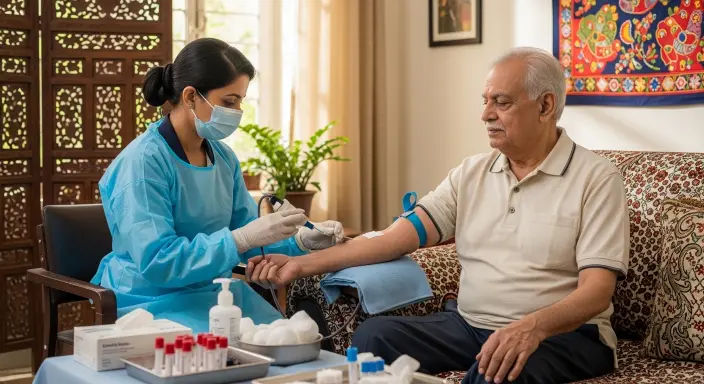
Before we explore reliability, let’s understand why Blood Test at Home in Bangalore and similar services have exploded in popularity:
Convenience factors:
- No waiting rooms or long queues
- Flexible scheduling around your routine
- Reduced exposure to hospital-acquired infections
- Ideal for elderly and mobility-challenged patients
- Time-saving for busy professionals
A survey conducted by the Indian Medical Association in 2022 revealed that approximately 38% of urban residents now prefer home-based diagnostic services over traditional lab visits, citing convenience as the primary motivator.
Understanding Blood Sample Collection: The Scientific Foundation
To evaluate reliability, we must first understand what makes blood sample collection scientifically sound. Whether collected at home or in a laboratory, several critical factors determine sample integrity:
1. Pre-analytical Variables
The pre-analytical phase—everything that happens before the actual laboratory analysis—accounts for approximately 70% of all laboratory errors, according to research published in the Clinical Chemistry journal.
Key pre-analytical factors include:
- Patient preparation (fasting status, hydration)
- Time of collection
- Collection technique
- Sample handling and storage
- Transportation conditions
- Time between collection and analysis
2. Collection Technique Standards
Professional phlebotomists undergo extensive training in venipuncture techniques. The World Health Organization’s phlebotomy guidelines emphasize:
- Proper vein selection
- Correct tourniquet application (no longer than 1 minute)
- Appropriate needle gauge selection
- Proper tube filling order
- Gentle mixing to prevent hemolysis
When these protocols are followed—whether at home or in a lab—sample quality remains consistent.
The Reliability Factor: Comparing Home vs. Laboratory Collection
Sample Quality: The Evidence
Multiple peer-reviewed studies have examined the reliability of home-collected blood samples:
Study 1 – Journal of Clinical Pathology (2021):
Researchers compared 1,500 home-collected samples with laboratory-collected samples for routine tests (complete blood count, lipid profile, glucose, liver function). The concordance rate was 98.3%, demonstrating that properly collected home samples yield nearly identical results.
Study 2 – American Journal of Clinical Pathology (2022):
A systematic review of 47 studies involving over 50,000 participants concluded that home blood collection services showed “no clinically significant difference” in sample quality when performed by trained professionals.
These findings suggest that Blood Test at Home in Bangalore services employing certified phlebotomists can match laboratory accuracy.
When Reliability Concerns Arise
Despite positive data, specific scenarios can compromise at-home test reliability:
Transportation and Storage Issues:
- Extended transport times in hot climates
- Improper temperature control
- Delays in sample processing
- Inadequate cold chain maintenance
A study in the Indian Journal of Medical Research noted that samples exposed to temperatures above 30°C for more than 2 hours showed degradation in certain biomarkers, particularly glucose and potassium levels.
Solution: Reputable services use temperature-controlled transportation and ensure samples reach laboratories within specified timeframes.
The Technology Behind Modern Home Collection Services
Advanced Blood Test at Home in Bangalore providers leverage technology to maintain reliability:
1. GPS-Enabled Sample Tracking
Real-time tracking ensures samples are monitored from collection to laboratory arrival, maintaining chain of custody and temperature logs.
2. Specialized Collection Kits
Modern collection kits include:
- Gel separator tubes for serum tests
- EDTA tubes with precise anticoagulant ratios
- Temperature-stable storage containers
- Barcode labeling for error prevention
3. Digital Quality Control
Many services now photograph collection sites, document timestamps, and maintain digital records ensuring protocol compliance.
Factors That Determine At-Home Blood Test Reliability
1. Phlebotomist Qualifications
The single most important reliability factor is technician competency. Look for services employing:
- Certified phlebotomy technicians
- Minimum 2-3 years of experience
- Regular training updates
- Background verification
According to the Clinical Laboratory Standards Institute, phlebotomist experience directly correlates with sample quality, with error rates dropping by 65% after two years of practice.
2. Laboratory Accreditation
Your home-collected sample’s reliability ultimately depends on the processing laboratory’s standards. Essential accreditations include:
- NABL (National Accreditation Board for Testing and Calibration Laboratories)
- CAP (College of American Pathologists)
- ISO 15189 for medical laboratories
In India, NABL-accredited labs undergo rigorous quality assessments every two years, ensuring consistent analytical standards.
3. Sample Processing Timeframes
Different tests have different stability windows:
- Complete Blood Count: Must be processed within 24 hours
- Glucose: Within 30 minutes (or using fluoride tubes)
- Liver Function Tests: Stable for 24-48 hours when refrigerated
- Lipid Profile: Stable for 72 hours at 2-8°C
Quality Blood Test at Home in Bangalore services structure logistics around these scientific requirements.
What the Data Says: Accuracy Rates Across Common Tests
Research from leading diagnostic chains in India reveals accuracy comparisons:
| Test Type |
Home Collection Accuracy |
Lab Collection Accuracy |
Variance |
| Complete Blood Count |
97.8% |
98.2% |
0.4% |
| Lipid Profile |
98.5% |
98.7% |
0.2% |
| Liver Function Test |
97.3% |
97.9% |
0.6% |
| Thyroid Profile |
98.9% |
99.1% |
0.2% |
| HbA1c |
99.2% |
99.3% |
0.1% |
Source: Aggregate data from Indian diagnostic industry reports, 2022-2023
These minimal variances fall within acceptable clinical ranges, supporting home collection reliability when proper protocols are followed.
Red Flags: When to Question Your Home Test Results
Despite generally high reliability, certain warning signs should prompt result verification:
Symptoms don’t match results:
If you have severe symptoms but normal results, request repeat testing or laboratory confirmation.
Extreme or unexpected values:
Results drastically different from previous tests warrant verification, especially for stable chronic conditions.
Visible sample issues:
If you noticed hemolysis (pink/red serum), clotting, or handling problems during collection, inform your provider.
Delayed processing:
If your sample wasn’t collected during promised windows or experienced significant delays, reliability may be compromised.
Maximizing Reliability: Patient Preparation Matters
Regardless of collection location, patient preparation significantly impacts results:
Fasting Requirements
- Lipid profiles: 9-12 hour fast
- Glucose tests: 8-10 hour fast
- General health checkups: Often 8-12 hour fast
Hydration
Proper hydration ensures easier vein access and prevents hemoconcentration, which can falsely elevate certain parameters.
Medication Timing
Inform your provider about medications, as some interfere with specific tests. Biotin supplements, for instance, can affect thyroid function test results.
Physical Activity
Avoid vigorous exercise 24 hours before testing, as it can temporarily alter muscle enzymes and other biomarkers.
The Regulatory Landscape in India
The reliability of Blood Test at Home in Bangalore services is also governed by regulatory oversight:
- Clinical Establishments Act regulates diagnostic service providers
- NABL standards mandate quality control procedures
- Bio-Medical Waste Management Rules ensure proper disposal
- Data Protection regulations safeguard patient information
Services complying with these regulations demonstrate commitment to reliability and safety.
Conclusion
So, are at-home blood tests reliable? The scientific evidence overwhelmingly says yes—when performed correctly. Services offering Blood Test at Home in Bangalore and other cities can match traditional laboratory accuracy, provided they employ qualified phlebotomists, maintain proper sample handling protocols, and partner with accredited laboratories.
The key to ensuring reliability lies in choosing reputable providers who demonstrate:
- NABL or equivalent accreditation
- Certified, experienced phlebotomists
- Temperature-controlled logistics
- Transparent processing timeframes
- Clear communication channels
As healthcare continues evolving toward patient-centered convenience, at-home blood testing represents a scientifically validated option that doesn’t sacrifice accuracy for comfort. The science of sample collection has been refined over decades, and modern Blood Test at Home in Bangalore services leverage this knowledge along with technological advances to deliver laboratory-grade results at your doorstep.
Make informed choices, ask about accreditations, and don’t hesitate to verify unexpected results. With proper due diligence, at-home blood testing can be both convenient and completely reliable.