3T MRI vs 1.5T MRI: Which One Is Better for Your MRI Scan in Bengaluru?
When you’re scheduled for medical imaging, understanding the technology behind it can help you make informed decisions about your healthcare. The debate between 3 Tesla (3T) and 1.5 Tesla (1.5T) MRI machines has become increasingly relevant as patients seek the most accurate diagnostic tools. If you’re looking for an MRI scan in Bengaluru, knowing the differences between these two types of scanners can significantly impact your diagnostic experience and results.
Magnetic Resonance Imaging has revolutionized modern medicine by providing detailed internal body images without radiation exposure. However, not all MRI machines are created equal, and the distinction between 3T and 1.5T technology represents a significant advancement in imaging capabilities.
Understanding MRI Technology and Tesla Strength
Before diving into the comparison, it’s essential to understand what “Tesla” means in the context of MRI technology. Tesla is a unit of measurement for magnetic field strength. The higher the Tesla number, the stronger the magnetic field the machine generates. This magnetic field strength directly influences image quality, scan duration, and diagnostic accuracy.
Traditional MRI machines operate at 1.5T, which has been the gold standard for decades. However, technological advancements have introduced 3T MRI scanners, which offer double the magnetic field strength. This increase isn’t just a minor upgrade—it represents a substantial leap in imaging capabilities that can affect diagnosis accuracy and treatment planning.
Image Quality and Resolution Comparison for MRI Scan in Bengaluru
The most significant advantage of 3T MRI technology lies in its superior image quality. With twice the magnetic field strength, 3T scanners produce images with exceptional clarity and detail. This enhanced resolution becomes particularly crucial when examining small anatomical structures such as blood vessels, nerves, and tiny lesions that might go undetected on lower-strength machines.
For neurological imaging, the difference becomes immediately apparent. Brain scans performed on 3T machines reveal intricate details of white matter, gray matter differentiation, and subtle abnormalities that could indicate early-stage diseases. The enhanced signal-to-noise ratio means radiologists can identify conditions like microbleeds, small tumors, or early dementia markers with greater confidence.
Musculoskeletal imaging also benefits tremendously from 3T technology. Detailed visualization of cartilage, ligaments, and tendons becomes possible, allowing orthopedic specialists to diagnose sports injuries, degenerative conditions, and complex joint problems with unprecedented accuracy. The superior contrast resolution helps distinguish between different tissue types more effectively.
Scan Time Efficiency
One practical advantage that patients appreciate is the reduced scan time with 3T MRI machines. Because of the stronger magnetic field, these scanners can acquire high-quality images faster than their 1.5T counterparts. What might take 45 minutes on a 1.5T machine could potentially be completed in 30 minutes on a 3T scanner while maintaining or even improving image quality.
This time reduction matters significantly for patients who struggle with claustrophobia or have difficulty remaining still for extended periods. Children, elderly patients, and those with chronic pain conditions particularly benefit from shorter examination times. The faster acquisition also means reduced chances of motion artifacts that can compromise image quality.
Clinical Applications: When to Choose Which MRI Scan in Bengaluru
The choice between 3T and 1.5T technology often depends on the specific clinical application and the body part being examined. Certain conditions and anatomical regions benefit more dramatically from the enhanced capabilities of 3T imaging.
Neurological Imaging Excellence
For brain and spine imaging, 3T MRI scanners excel in detecting subtle pathologies. Conditions like multiple sclerosis, where identifying small demyelinating plaques is crucial, benefit enormously from the enhanced resolution. Functional MRI studies, which map brain activity, also achieve better results with 3T technology due to improved signal detection.
Vascular imaging of the brain becomes remarkably detailed with 3T scanners. Aneurysms, arteriovenous malformations, and subtle vascular abnormalities appear with greater clarity, potentially preventing serious complications through earlier detection and intervention.
Orthopedic and Sports Medicine
Athletes and active individuals requiring detailed musculoskeletal assessment find 3T imaging particularly valuable. The technology excels at visualizing cartilage damage, subtle ligament tears, and bone marrow edema patterns that indicate stress injuries. This detailed information helps surgeons plan minimally invasive procedures and helps physical therapists design targeted rehabilitation programs.
Cardiac Imaging Advances
Cardiac MRI has evolved significantly with 3T technology. The stronger magnetic field allows for detailed assessment of heart muscle viability, blood flow patterns, and valve function. Patients with suspected coronary artery disease or cardiomyopathies receive more comprehensive evaluations, leading to better treatment decisions.
Considerations and Limitations
While 3T MRI technology offers numerous advantages, it’s not universally superior for every application. Understanding these limitations helps patients and physicians make appropriate choices when seeking an MRI scan in Bengaluru.
Patient Comfort and Safety
The stronger magnetic field of 3T machines can create louder acoustic noise during scanning, which some patients find uncomfortable despite ear protection. Additionally, patients with certain metallic implants may face more restrictions with 3T scanners due to the increased magnetic force. The heating effect on metallic objects is also more pronounced at 3T, requiring careful patient screening.
Some individuals experience a phenomenon called peripheral nerve stimulation more frequently with 3T scanners, though this is usually mild and temporary. Patients with tattoos containing metallic pigments should inform technologists, as the stronger magnetic field could cause localized heating or discomfort.
Imaging Artifacts
Paradoxically, the increased magnetic field strength can sometimes create specific imaging artifacts that don’t occur at 1.5T. These include dielectric artifacts, particularly when imaging larger body parts like the abdomen and pelvis. Experienced radiologists recognize these artifacts and know when 1.5T imaging might actually provide clearer results for specific applications.
Cost and Accessibility Factors
The advanced technology of 3T MRI machines represents a significant investment for healthcare facilities. This translates to higher operational costs, which may affect patient expenses. However, the diagnostic value and potential for earlier disease detection often justify the investment.
In major metropolitan areas, accessibility to both technologies continues to improve as healthcare facilities recognize the clinical benefits of offering multiple imaging options. Patients benefit from having choices based on their specific medical needs and circumstances.
Making the Right Choice for Your MRI Scan in Bengaluru
The decision between 3T and 1.5T MRI scanning should be guided by your physician’s recommendation based on several factors. Your specific medical condition, the body part being examined, any implanted devices, and the diagnostic question being addressed all play crucial roles in determining the most appropriate technology.
For complex neurological conditions, suspected small lesions, detailed musculoskeletal evaluation, or advanced cardiac imaging, 3T technology often provides superior diagnostic information. However, for routine screening, abdominal imaging, or patients with certain contraindications, 1.5T machines remain highly effective and appropriate.
The expertise of the radiologist interpreting your images matters as much as the machine strength. An experienced radiologist can extract maximum diagnostic value from either technology, ensuring accurate diagnosis and appropriate treatment planning.
Technological Evolution and Future Trends
Medical imaging continues to evolve rapidly, with both 3T and 1.5T technologies benefiting from software improvements, better coil designs, and enhanced image processing algorithms. Artificial intelligence integration is enhancing both platforms, improving image quality and helping radiologists identify subtle abnormalities more efficiently.
The gap between 3T and 1.5T capabilities continues to narrow in some applications as 1.5T technology incorporates advanced features. Conversely, 3T machines are becoming more refined, addressing earlier limitations and expanding their clinical applications.
Conclusion: Finding the Best MRI Scan in Bengaluru for Your Needs
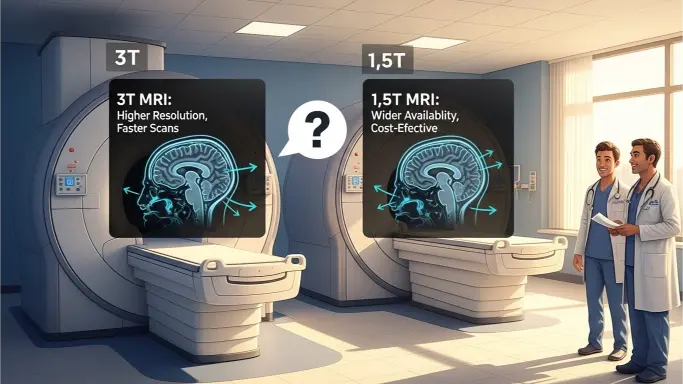
Neither 3T nor 1.5T MRI technology is universally “better”—rather, each has specific strengths that make it ideal for particular clinical situations. The 3T MRI offers superior image resolution, faster scan times, and enhanced diagnostic capabilities for complex conditions, particularly in neurological and musculoskeletal imaging. Meanwhile, 1.5T machines provide excellent diagnostic quality for many applications, with proven reliability and wider compatibility with medical implants.
When selecting where to obtain your MRI scan in Bengaluru, consider facilities that offer both technologies and have experienced radiologists who understand when each is most appropriate. Your referring physician’s recommendation, combined with the imaging center’s expertise, will guide you toward the technology that best serves your diagnostic needs. Quality medical imaging isn’t just about the strongest magnet—it’s about matching the right technology to your specific clinical situation, ensuring accurate diagnosis and optimal patient care.